Professional workshop
Dorian Nuskind-Oder – Ballet for Wonderers and Wanderers
16 ⇾ Mar. 19 2026 (Monday – Thursday)
09:30 to 12:30
Weekly rate:$80
Drop-in:$28
Every day
Teaching Language: Frenglish
Questions can be asked in:
French, English
Categories
#Creative process #Somatic #Technique
#Creative process #Somatic #Technique
© Simon Grenier-Poirier
Objective
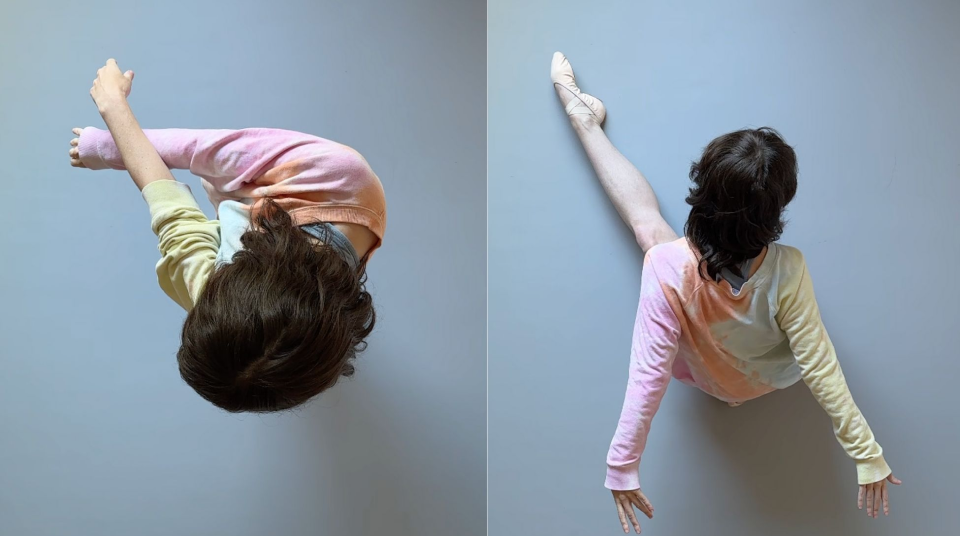
How can the individual reality of our bodies productively engage with the geometries of balletic form? What does it mean to move generously, or with grace? What happens when we slow way down and let movements that we think we know surprise us?
For better or for worse, many dancers who have passed through formal training programs spend a lot of time taking ballet class. On one hand, I am curious about the potential of this shared vocabulary as a platform for collective imagining. On the other hand, I am interested in unpacking the value systems which can prevent us from finding pleasure and creative freedom within this vocabulary.
Designed as a laboratory, we will explore our own pathways towards the levity and expansiveness which is at the heart of balletic technique.
For better or for worse, many dancers who have passed through formal training programs spend a lot of time taking ballet class. On one hand, I am curious about the potential of this shared vocabulary as a platform for collective imagining. On the other hand, I am interested in unpacking the value systems which can prevent us from finding pleasure and creative freedom within this vocabulary.
Designed as a laboratory, we will explore our own pathways towards the levity and expansiveness which is at the heart of balletic technique.
Content
Each day begins with a simple ballet barre. Exercises are presented with several options of physical complexity, allowing each participant to select the level of intensity that is appropriate for them. The series of exercises will remain the same each day, allowing participants to deepen their physical experimentation throughout the week.
Exercises in the centre will take the form of movement scores inspired by the traditional class structure (adagio, waltz, petit allegro etc). Some scores are movement puzzles designed to facilitate personal exploration, others are group activities to collectively create and dance together.
Exercises in the centre will take the form of movement scores inspired by the traditional class structure (adagio, waltz, petit allegro etc). Some scores are movement puzzles designed to facilitate personal exploration, others are group activities to collectively create and dance together.
Workshop Rhythm
~ Adaptable to the group’s needs
~ Variable
Accessibility Features
~ Cardio exercices
~ Exercices are adaptable
~ Jumps and shocks
~ Short verbal explications
~ Standing up for a long time
~ Sub-groups exercices
Biography
Dorian Nuskind-Oder is a choreographer and cultural worker. Her works include Looper (2024), a collaboration with circus artist Elena Lev; Speed Glue (2019), a choreographic score for two table tennis players; and Memory Palace (2016), a performance for three people with a background in social or folkloric dance forms. She is co-director of Le Radeau, an artist-run production company.
“Cette formation m’a donné des nouveaux outils de leadership et d’empathie.” Melvin
Partners
This workshop is supported by the Conseil de la formation continue arts et culture de Montréal (CFC) in collaboration with Studio 303. The CFC’s continuing education activities are supported by the Intervention-Compétences program, thanks to the financial participation of the Quebec government.